
When it comes to improving your movement, building strength, and recovering from injury, one approach doesn’t always have to do it all. Combining different forms of movement and treatment can help you work toward your goals in a more well-rounded way.


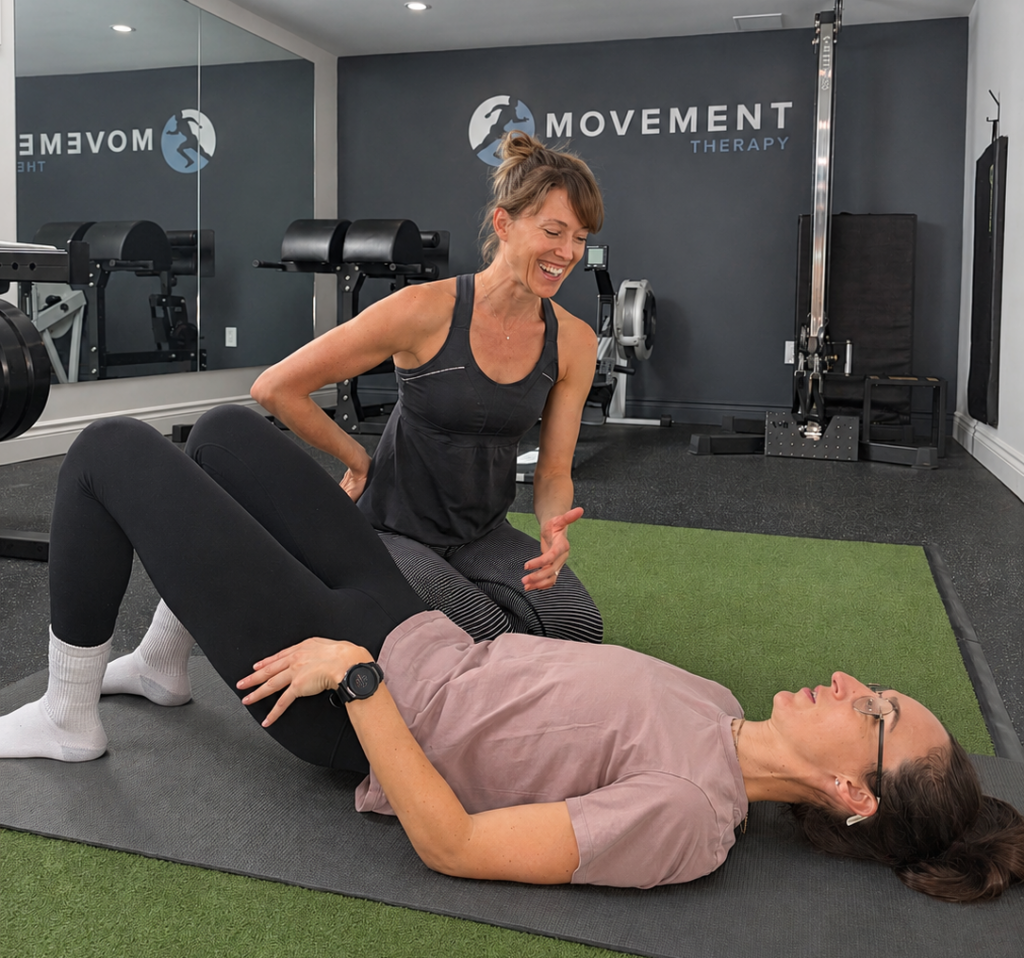


At Movement Therapy, we believe in the benefits of a multidisciplinary approach to health and wellness, bringing together different services to support your recovery, strength, and long-term physical well-being.
One combination worth exploring? Physiotherapy and Mat Pilates.
What is Mat Pilates?
When you hear the word Pilates, you might picture a large machine with springs and straps, known as a Reformer. But Pilates doesn’t always require specialized equipment!
Mat Pilates is a low-impact form of exercise performed primarily on a mat, using your body weight and controlled movements to develop strength, stability, flexibility, and body awareness.
With an emphasis on core engagement, breathing, posture, and movement control, Mat Pilates can be adapted to suit a variety of fitness levels and abilities.
Whether you’re new to exercise, looking to improve your strength, or wanting to complement your existing fitness routine, Mat Pilates offers an accessible way to move with purpose.
How Does Mat Pilates Complement Physiotherapy?
Physiotherapy and Mat Pilates may have different areas of focus, but they can work well together.
Physiotherapy focuses on assessing and treating injuries, managing pain, restoring mobility, and improving physical function. Your physiotherapist develops an individualized treatment plan based on your specific needs and goals.
Mat Pilates focuses on controlled movement, muscular endurance, core strength, balance, and body awareness.
When appropriately incorporated into your routine, Pilates can help reinforce some of the movement patterns, strength, and stability you’re working on during physiotherapy.
Here’s how the two can complement each other:
1. Building Core Strength and Stability
Your core plays an important role in supporting your spine, maintaining balance, and helping your body move efficiently.
Many physiotherapy treatment plans include exercises designed to improve trunk strength and stability. Mat Pilates can provide an additional opportunity to develop these qualities through controlled, progressive movements.
2. Improving Body Awareness and Movement Control
Have you ever been told by your physiotherapist to pay attention to your posture, engage certain muscles, or change how you perform a movement?
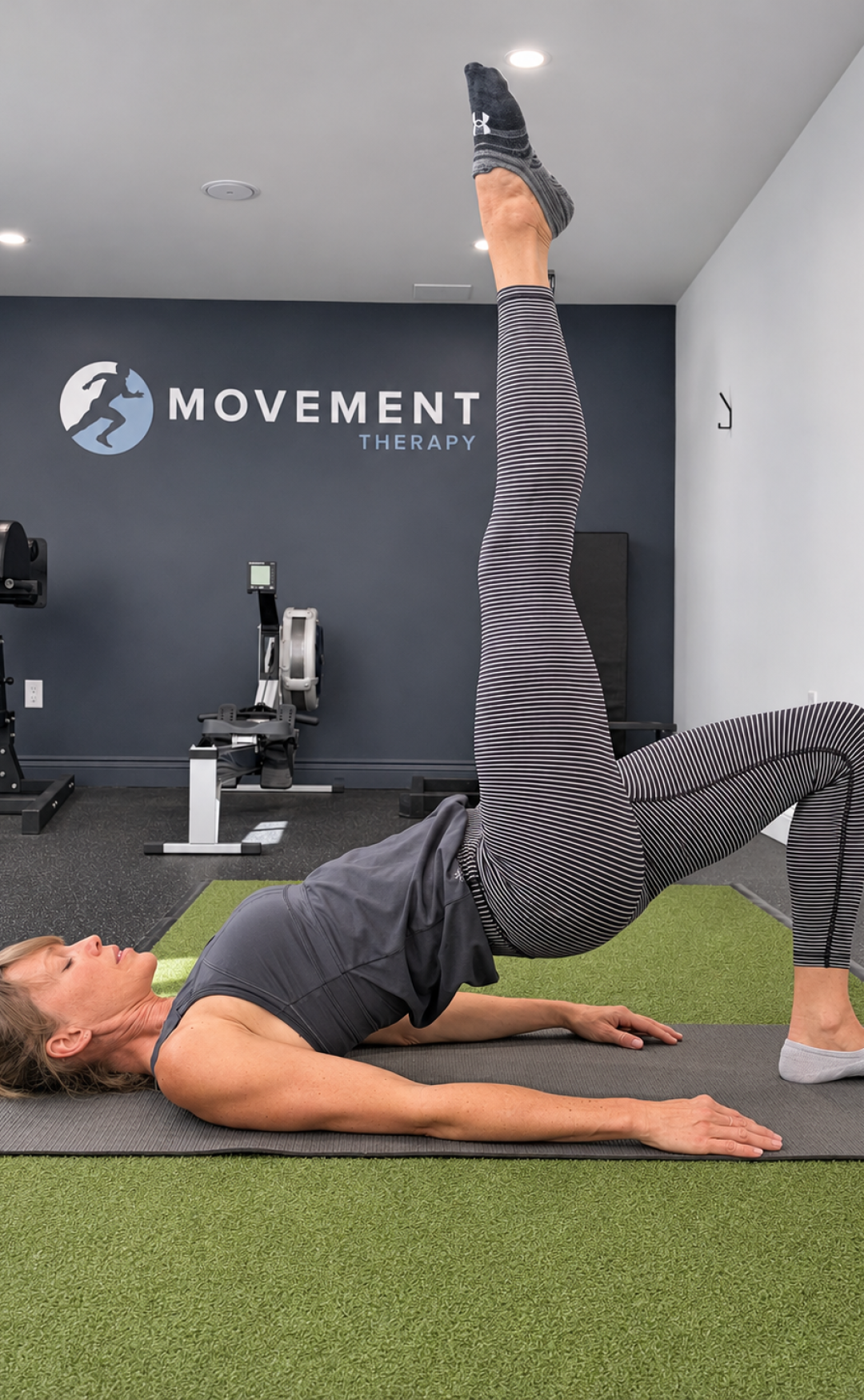
Mat Pilates places a strong emphasis on how your body moves, encouraging you to become more aware of muscle engagement, alignment, breathing, and control.
This increased awareness can help you apply movement strategies learned in physiotherapy to other exercises and everyday activities.
3. Supporting Mobility & Flexibility
Limited mobility can affect everything from your workouts to everyday activities.
While physiotherapy can help identify and address specific movement restrictions, Mat Pilates incorporates exercises that encourage controlled movement through comfortable ranges of motion.
Together, these approaches may help you work toward improved mobility while continuing to build strength and stability.
4. Developing Strength Beyond the Treatment Room
Progress doesn’t stop when your physiotherapy appointment ends.
As you recover and become more confident in your movement, finding appropriate ways to stay active can be an important part of maintaining your progress.
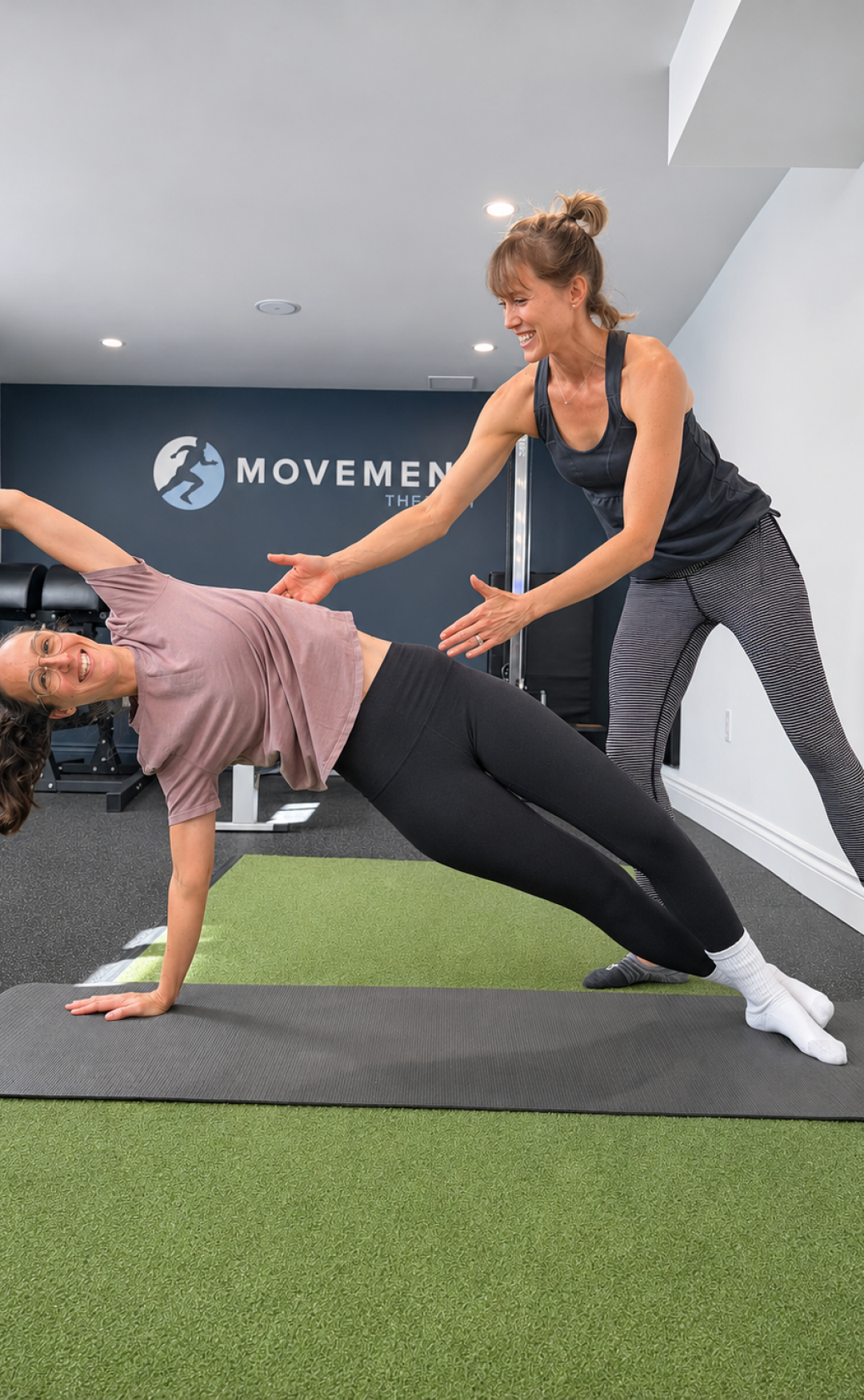
Mat Pilates can be a great addition to your exercise routine, helping you continue developing strength, endurance, and movement confidence outside of your physiotherapy sessions.
It’s important to remember that Pilates is not a replacement for physiotherapy or your prescribed rehabilitation exercises. Instead, it can serve as a complementary form of exercise when appropriate for your stage of recovery.
Why a Multidisciplinary Approach Matters
Your body doesn’t operate in isolated parts, and your approach to movement and recovery doesn’t necessarily need to either.
At Movement Therapy, our multidisciplinary philosophy recognizes that different services can play different roles in supporting your health.
Physiotherapy may help you address an injury, improve mobility, or work toward returning to an activity you enjoy. Mat Pilates can complement those goals by providing an additional way to build strength, improve movement control, and stay active.
The goal isn’t simply to feel better during treatment. It’s to help you build the confidence and physical capacity to keep moving well beyond it.
By combining appropriate treatment with ongoing movement and exercise, you can take a more comprehensive approach to your physical well-being.
Is Mat Pilates Right for You?
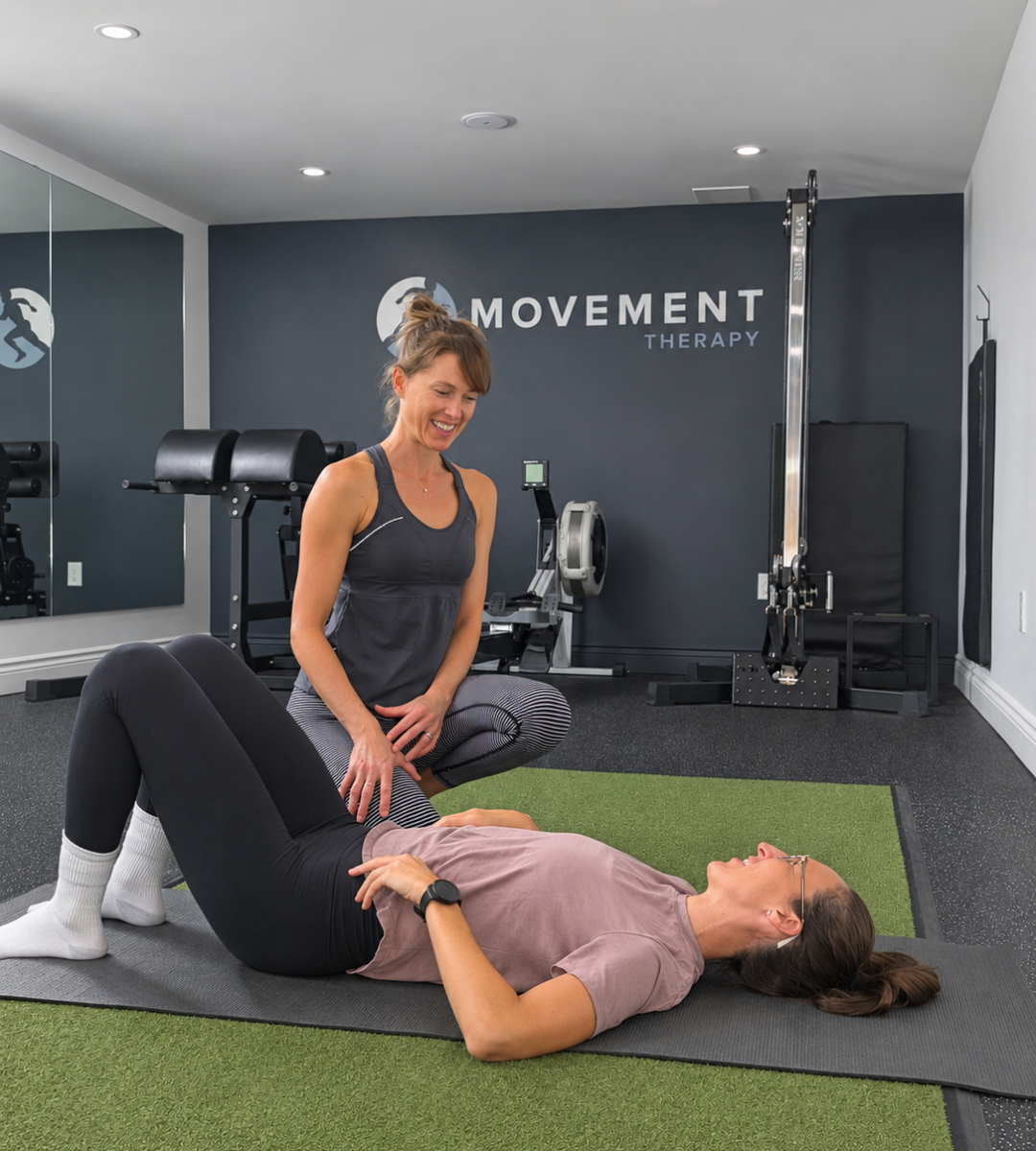
Mat Pilates can be suitable for many individuals, including beginners, people looking to build strength, and those interested in adding low-impact exercise to their routine.
However, if you’re currently recovering from an injury, experiencing pain, or undergoing physiotherapy, it’s important to make sure the exercises are appropriate for your condition and stage of recovery.
Your physiotherapist can help you determine whether Mat Pilates would be a beneficial addition to your treatment plan and whether any modifications may be needed.
Move Better, Feel Stronger, and Keep Progressing
Whether you’re working through an injury, looking to improve your strength, or simply wanting to become more active, your movement journey doesn’t have to follow just one path.
Physiotherapy helps you work toward restoring function. Mat Pilates can help you continue building strength, stability, and confidence in your movement.
At Movement Therapy, we’re here to support your goals through a multidisciplinary approach that looks beyond individual treatments and focuses on your overall well-being.
Interested in adding Mat Pilates to your routine? Ask our team how Pilates can complement your physiotherapy treatment plan and help you take the next step toward moving better.

